Running field-audio-tools on a long dual-mic F3 take
Yema Haizi, Kangding, Sichuan


Background
Overview
We ran all three commands on Take 002, a three-hour Zoom F3 recording, and the notes below cover the input, the files written, and two gaps we found in lowdom reporting and threshold calibration.
Field details
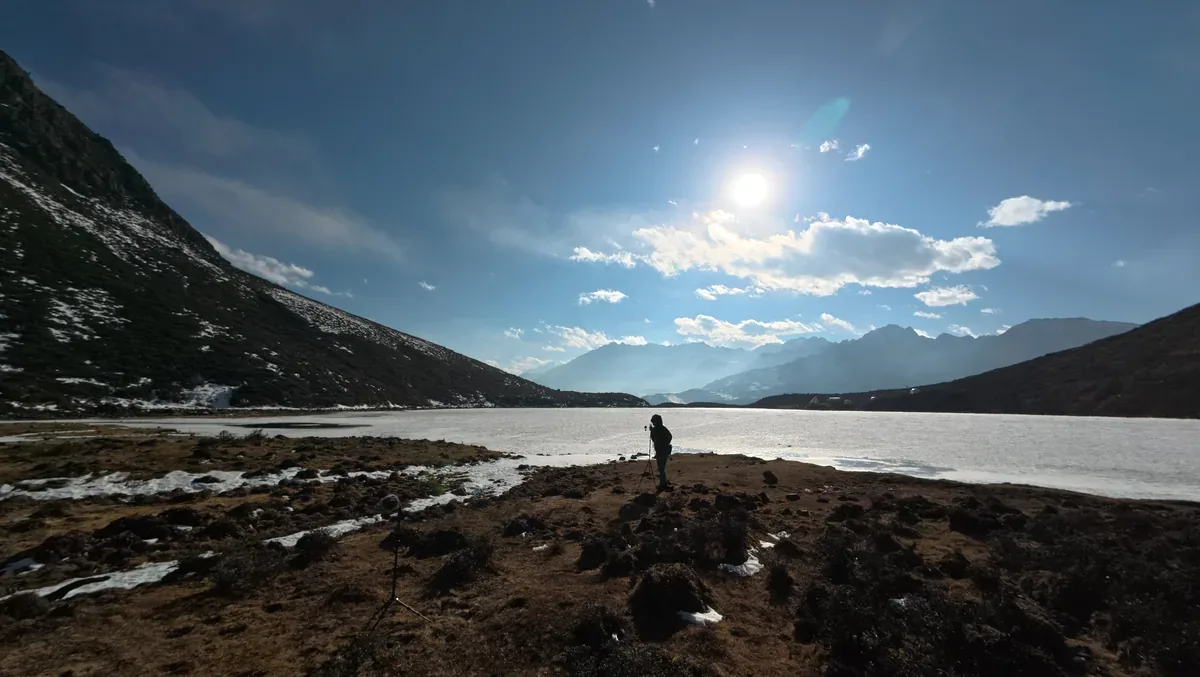
The GPX trail to the recording site begins on highway S434 at Yagya Ge, Sichuan, at roughly 3,894 m elevation, with roadside access on the pass before the walk in. It ends at the dome tent at Yema Haizi, about 4,055 m, with Yema Haizi lake to the east of that camp. We were guided by Dong Sheng & Xiao Zhang (local mountain guides in Kangding) and made most of the recordings the next morning. Our electronic field gear is still heavy, so this trip we reached the camp and recording site partly on foot and partly on horseback.
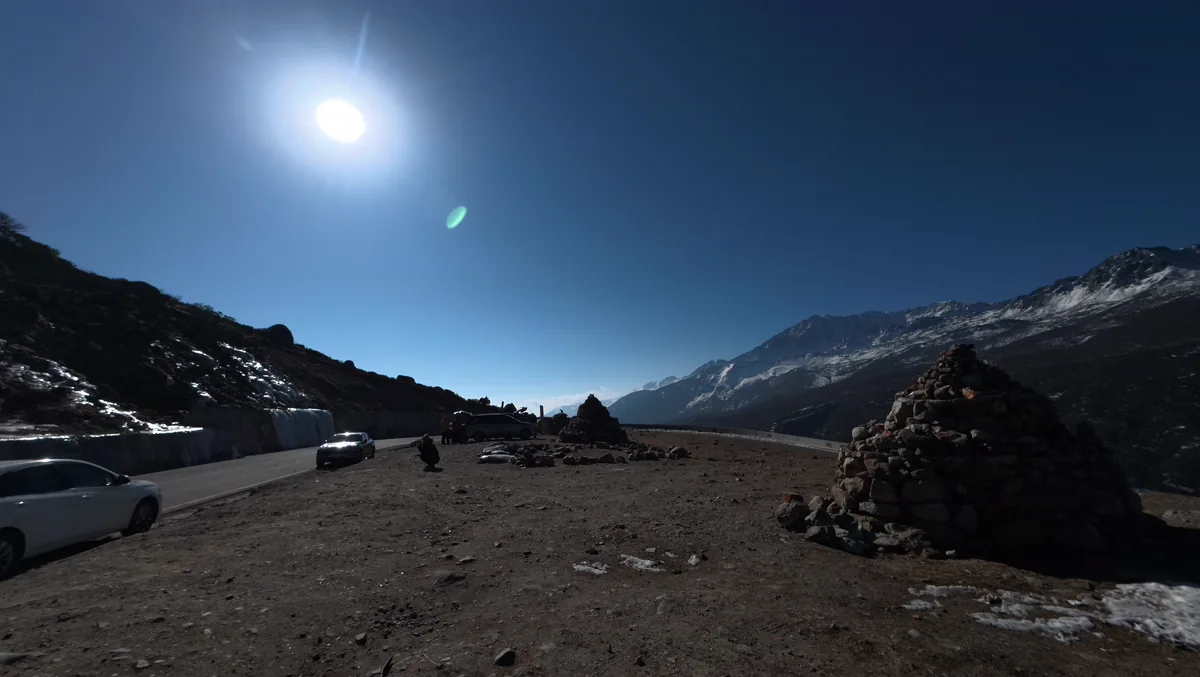
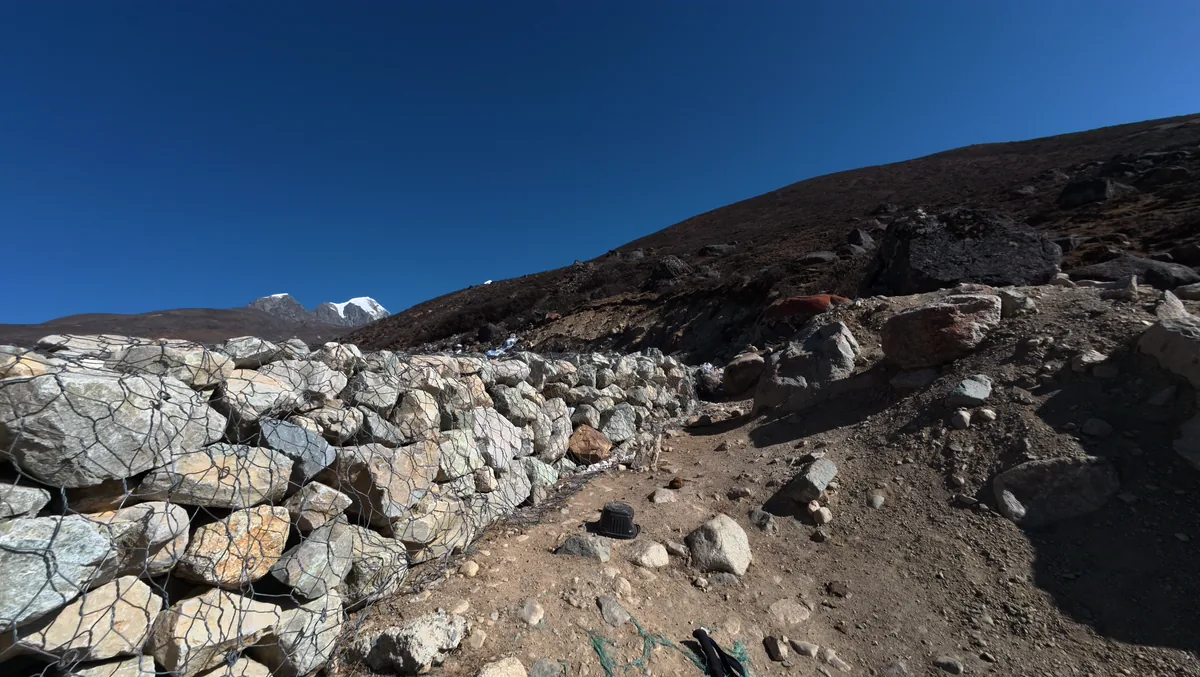
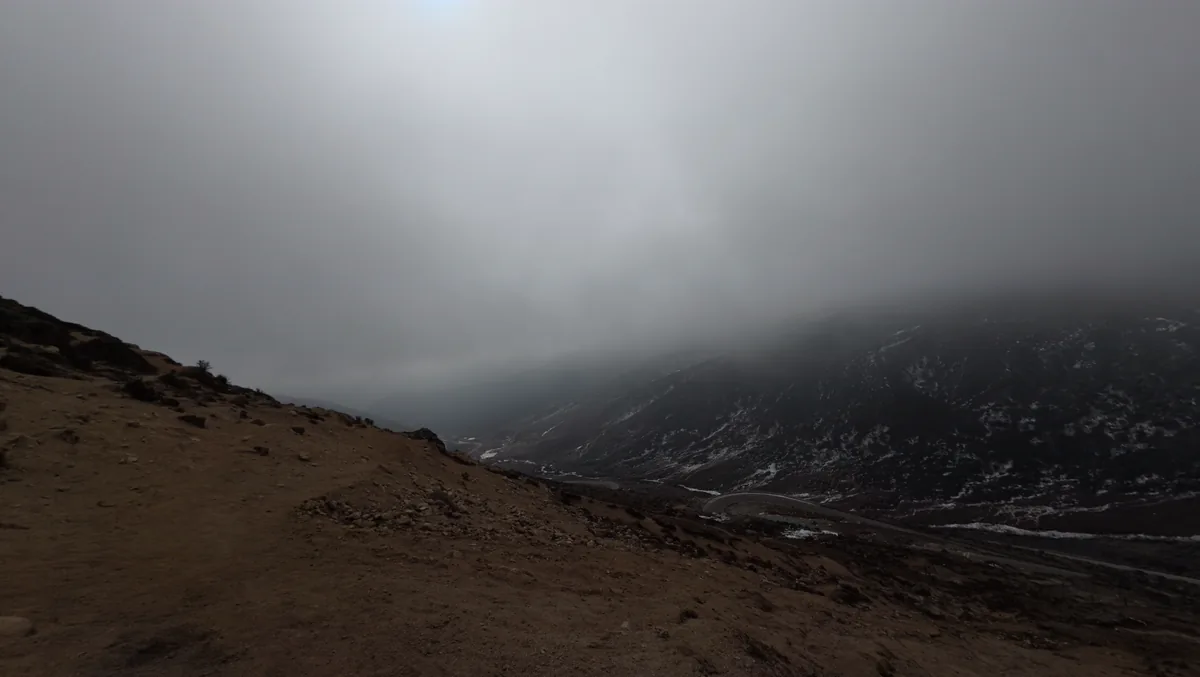
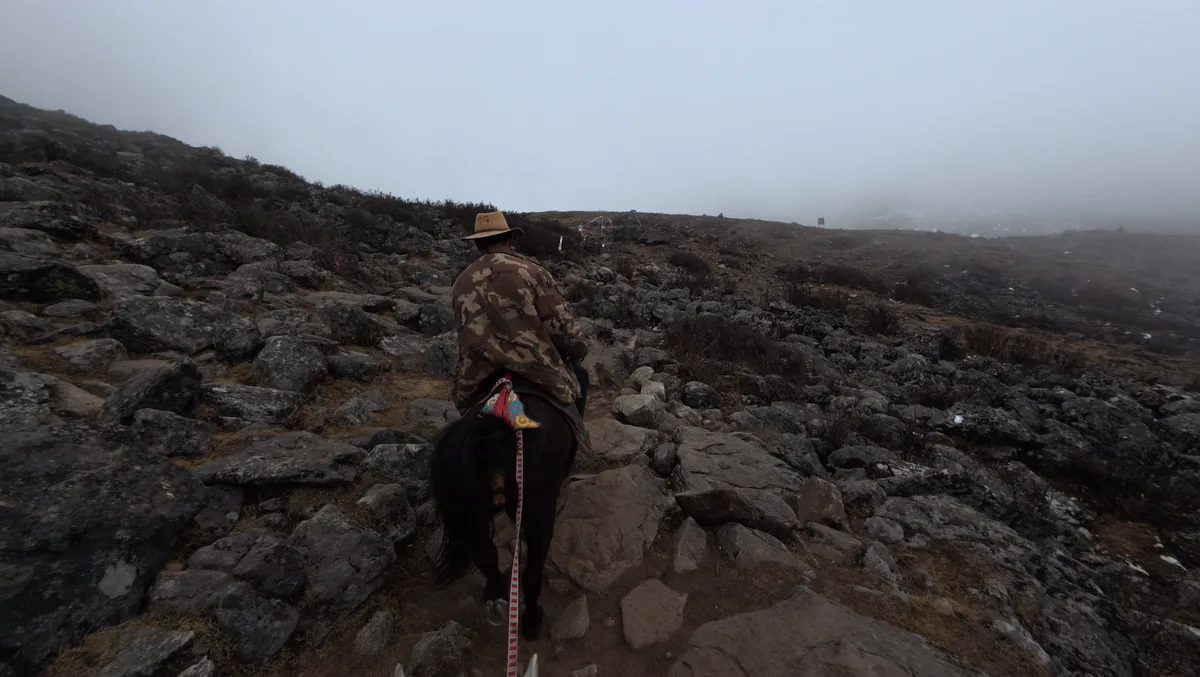
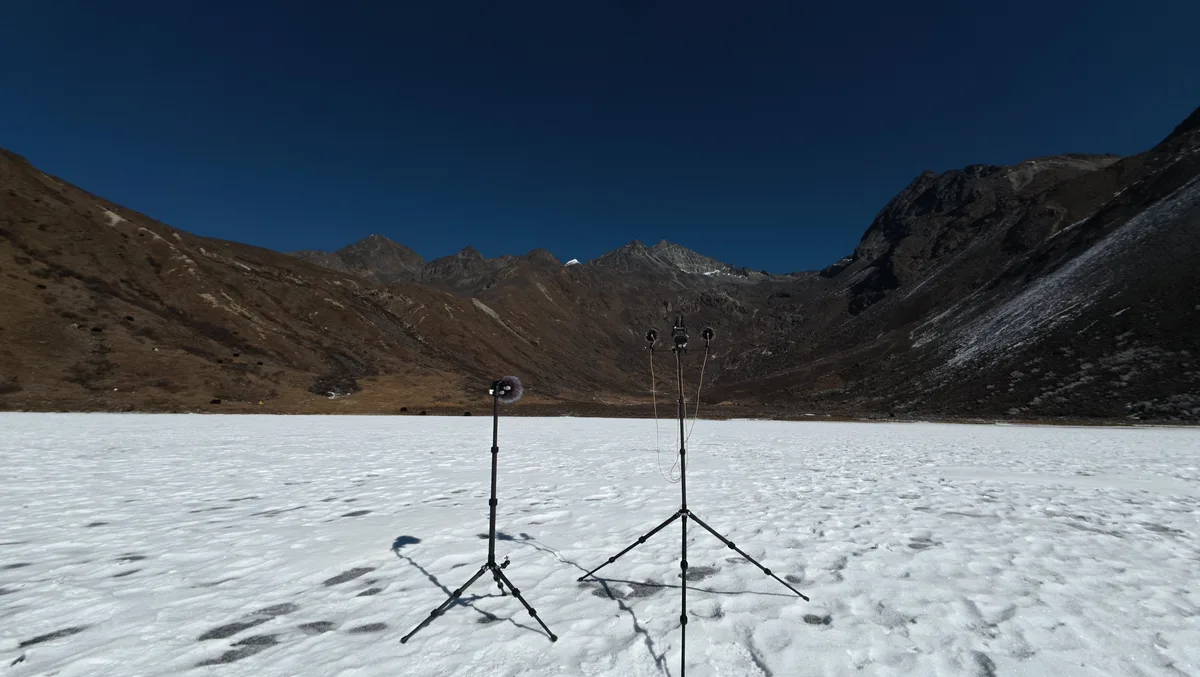
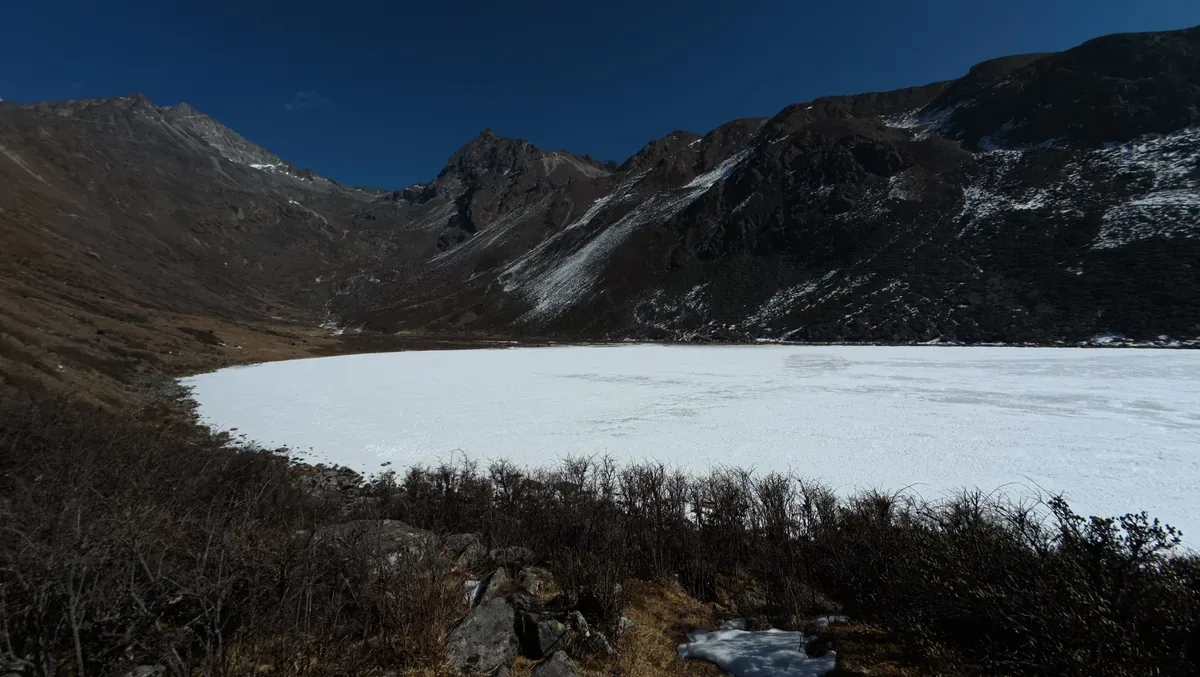
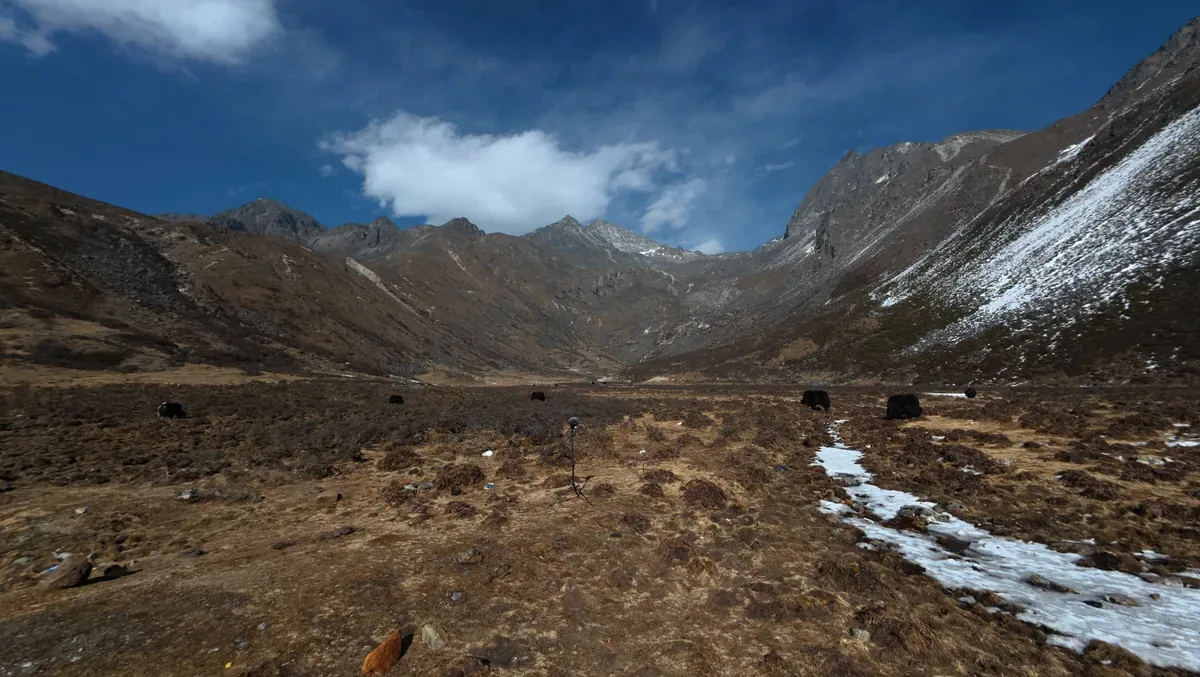
Every recording in this report was made at a specific position on Yema Haizi lake itself. It was a good season for it, with the lake frozen over. On the northeast side, the ice thinned toward the deeper water shown in Fig. 2 and along the shelf leading into the area of Fig. 3; that is, to the right of where I stood in Fig. 4, where thinning ice and open water were clearly visible. We treated that edge with caution when passing through, but other positions on the lake were safe for extended recording.
Melting ice produced special sounds in that season, the locals call the phenomenon long hou (“dragon roar”). On the multimedia report, you can hear it throughout the whole recording.
After processing our recordings with lowdom, we identified desired fragments that could be handed on to birdidpv, which would run BirdNET on those ranges. The returned species list included instances where dragon roars were misclassified as avian calls. The identification report generates a spectrogram for each detected frame. What is even more interesting is that in the case of the frame at 01:41:05, BirdNET identified a waterbird, whereas the actual source was a human voice (Xiao Zhang) calling from across the lake. Confirmation required auditory inspection.
In future developments of the toolkit, we wish to develop a feature to automatically detect and exclude human speech from our recording segments (which are intended for sharing on bioacoustics platforms). This is useful for guided excursions in outdoor areas. While casual chats during recordings might have some anthropological or ethnographic value, we still need to remove them in post-processing if our goal is to isolate the soundscape or capture a dynamic, moving soundscape during expeditions.1
Field recording setups are varied. For the audio file used in this article, the specific setup is introduced under the Input section.
field-audio-tools
Current version of field-audio-tools is designed for recordings from this specific outdoor environment. Bare HTML comes from the CLI, and the demo packages linked here add site navigation and shared media styling.
This intention is expected to persist in future MAN network research.↩
Input
Both commands used the same pair of synchronized mono WAV exports from Take 002, and they read the files in track order. Site access, camp, and on-lake conditions are under Field details above.
- Files:
260115_002_Tr1.WAVand260115_002_Tr2.WAV - Recordist: Gewenxin Yu
- Microphones: two Primo EM273 omni-directional microphones, −37 dB ± 3 dB at 1 kHz sensitivity, 80 dB S/N ratio, 60 Hz ~ 20 kHz frequency range
- Recorder: Zoom F3, firmware 1.10 metadata
- Encoding: 48 kHz, mono, 32-bit floating-point PCM per track
- Duration: 03:02:24 per track
- Input size: 2,101,379,072 bytes per track
soundcite
We cut a 20-second passage beginning one hour into the take.
soundcite 260115_002_Tr1.WAV 260115_002_Tr2.WAV \
  --start 01:00:00 \
  --duration 20 \
  --title "Take 002 - 01:00:00 excerpt" \
  --recordist "Gewenxin Yu" \
  --recorded-at "2026-01-15T13:19:25+08:00" \
  --location "Yema Haizi, Kangding, Sichuan" \
  --license "CC BY-NC-SA 4.0" \
  --notes "Recorded with two Primo EM273 omni-directional microphones (−37 dB ± 3 dB at 1 kHz, 80 dB S/N ratio, 60 Hz ~ 20 kHz) connected to a Zoom F3." \
--output 260115-002-soundcite- Runtime: about 2.2 seconds
- Selected range: 01:00:00.000–01:00:20.000
- Exact sample range: 172,800,000–173,760,000 at 48 kHz
- Track excerpts: two 32-bit float WAV files, 3,840,206 bytes each
- Preview: stereo Ogg Opus at 192 kbit/s, peak-limited at 0.95. The manifest records the limiter, which is why the preview is quieter than the excerpts
- Other files: lossless-source spectrogram, manifest,
SHA256SUMS, and static HTML
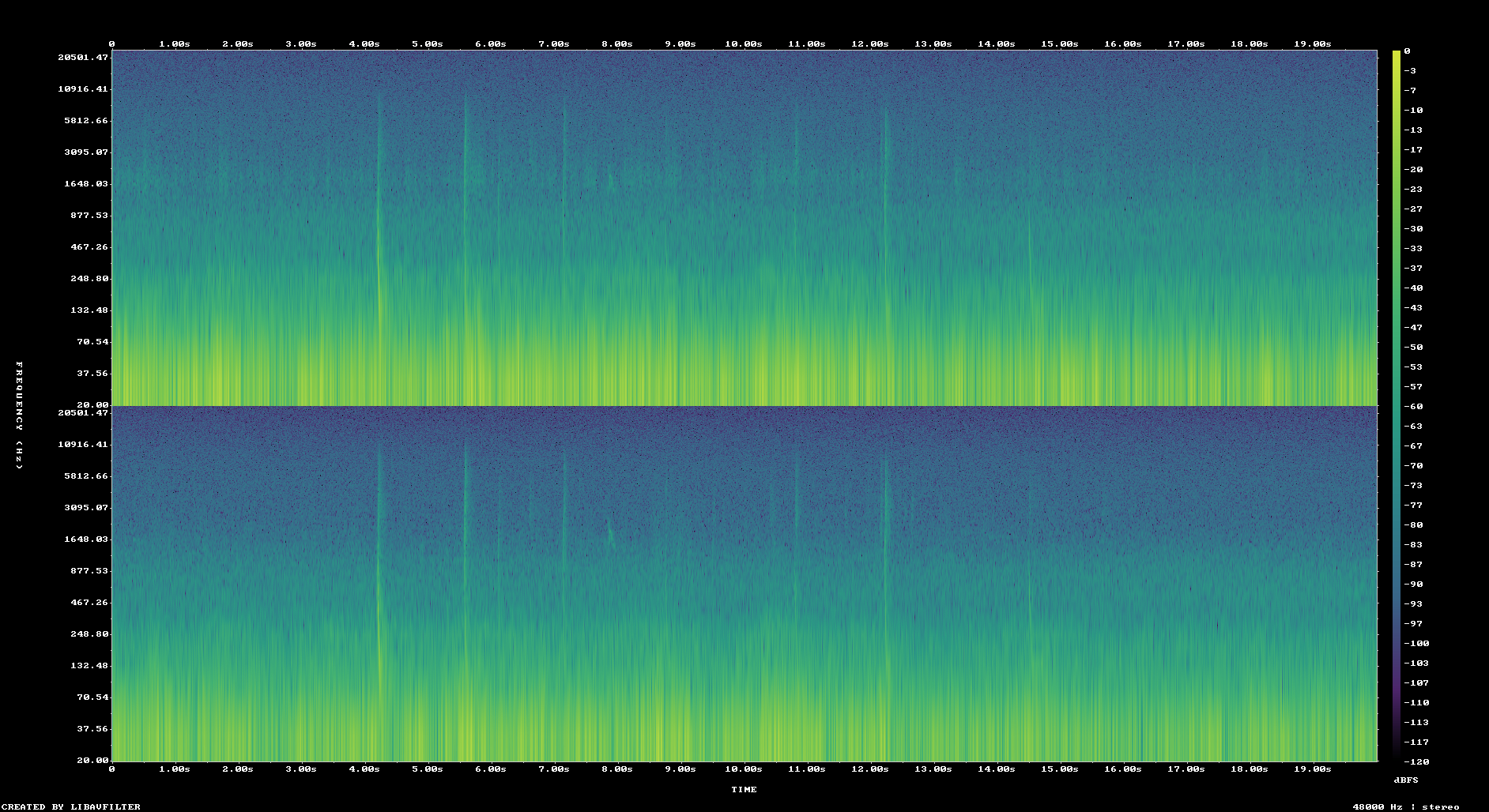
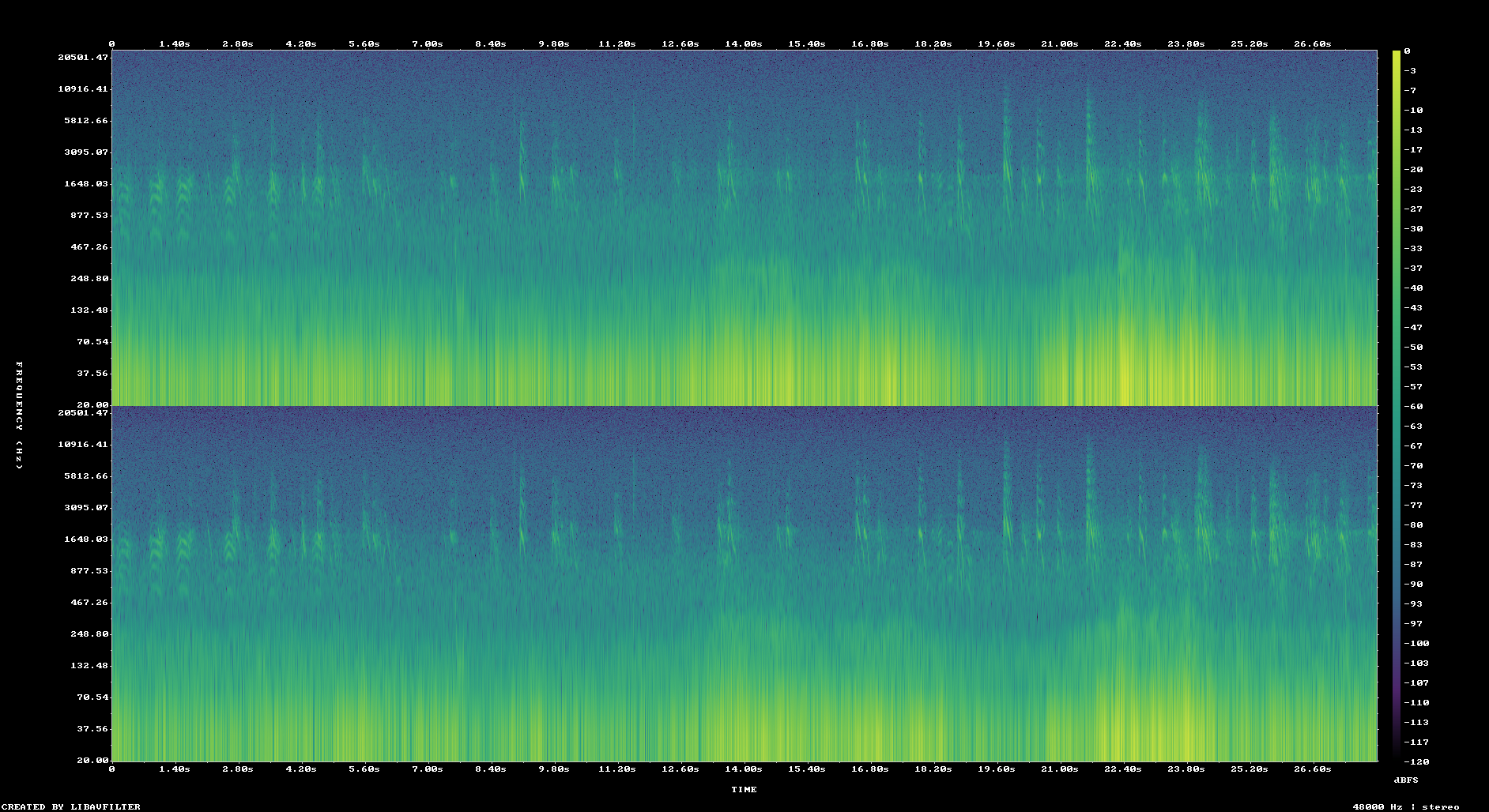
Browser preview and two-channel logarithmic spectrogram generated in the same run. The preview is lossy. The spectrogram is generated from the two WAV excerpts, which keep the floating-point samples.
We treat the two mono audio files as a pair here. Before any information extraction, the tool first verifies their sample rate, duration, channel count, recording time, and BWF time reference.
There is more information in the original recording files, including scene, take, date, recording time, track name, and coding history. These fields are then copied into the manifest.
Open the generated packageOpen the bare CLI package page (tool-generated HTML)Read its manifest
 Open the generated package
 Open the bare CLI package page (tool-generated HTML)
 Read its manifest
lowdom
lowdom decoded both tracks to mono at 4 kHz, divided them into 10-second windows:
lowdom 260115_002_Tr1.WAV 260115_002_Tr2.WAV \
  --window 10 \
  --threshold 0.95 \
  --report both \
--output 260115-002-lowdom- Runtime: about 67 seconds
- Analysed duration: 03:02:20
- Windows: 1,094 ten-second rows
- Default threshold: 0.95
- Rows above threshold: 833 (76.14%)
- Rows below threshold: 261 (23.86%)
Two blinded listening rounds used a cutoff of 0.95. Each round took ten windows above the threshold and ten below it, chosen at random. Of the 20 windows scoring above 0.95, 19 had obvious wind noise. Of the 20 scoring below it, 17 did not.
The threshold and the listening judgement agreed on 36 of the 40 samples. We adopted 0.95 for this take.
Open the multimedia reportOpen the bare CLI multimedia reportOpen the site data reportOpen the bare CLI timeline reportDownload the window dataDownload candidate clean intervalsRead the summary
 Download the window data
birdidpv
lowdom lists time ranges where wind is low. birdidpv runs BirdNET on those
ranges, using timestamps from candidate-clean-intervals.csv. The model hears
the 23.86% of the take that screening left unflagged.
Windows at or above 0.95 still hold bird calls, and the orange stretches of the timeline have some of them. Try the orange bars next to a green one first. This run finds which species turn up where wind is low, and collects those seconds as recordings for a free archive like xeno-canto.
birdidpv 260115_002_Tr1.WAV \
  --intervals 260115-002-lowdom/candidate-clean-intervals.csv \
  --lat 29.898 --lon 102.030 --week 3 \
  --min-conf 0.25 \
  --photos \
  --spectrograms \
  --report both \
--output 260115-002-birdidpv- Track analysed:
260115_002_Tr1.WAVonly - Ranges: the 135 below-threshold intervals, 00:43:30 of the 03:02:24 take
- Frame length: 3 seconds, fixed by the model
- Minimum confidence: 0.25
- Species filter: 29.898°N, 102.030°E, week 3 of 48
- Runtime: about two minutes of analysis, plus 19 seconds for 126 spectrograms and about 25 seconds for 11 reference photographs
- Detections: 128 frames across 11 species
Position filter
Coordinates come from the end of the GPX trace, at the camp on Yema Haizi. BirdNET uses them to restrict its global list of 6,522 species to the 788 that could occur there in mid-January. The unfiltered model also returns species from other regions at similarly high confidence. The 788-species list includes species absent from the site.
Detections at a glance
Ninety-nine of the 128 frames are corvids and match the audio: Red-billed Chough (82, 0.9998) and Large-billed Crow (17, 0.9118). Their harmonics extend above 2 kHz, and each outlevels the rest by 3–11 dB.
The remaining twenty-nine frames carry nine deep-voiced waterbird labels: Great Bittern, Ruddy Shelduck, Eurasian Coot, Graylag Goose, Eurasian Curlew, Eurasian Wigeon, Mallard, Common Shelduck, and Gray Heron. The lake was frozen during recording. These labels are false positives from the melting-ice bed described under Field details.
The worst offender is Great Bittern, with 12 detections, peak 0.9064, and eight within 70 seconds. None of the spectrograms show a call band above that LF bed. BirdNET assigns booming waterbirds because the ice boom (long hou) matches that acoustic template.
Compare the two by ear. The first page of xeno-canto for Botaurus stellaris has XC891071, XC1000766, XC832807 and XC741523, and the booms sound similar to the dragon roar, which helps explain the misidentifications. The ice has a ringing, electronic quality that the bird does not, and that is what tells them apart by ear. The spectrogram measurements we tried do not separate the two.
False positive at 01:41:05
At 01:41:05 BirdNET returns Ruddy Shelduck (0.928), the second-highest score in the run. On the original recording, Xiao Zhang is calling across Yema Haizi to the recordist.
Single-track limits
This birdidpv run read Tr1 only. lowdom screened both tracks
and kept the higher score per window. A call that is clearer on the second
microphone can fall outside the intervals sent to BirdNET. The output is
single-track labels, without stereo placement or direction. The next run will
use both tracks and take the highest confidence per frame.
birdidpv output
detections.csvhas every 3-second frame above the minimum confidence, with its timecodes, species, and score.species.csvtotals them by species.summary.jsonrecords the source, the ranges analysed, the position and week used to filter, and every other setting of the run.detection-spectrograms/holds 126 WebP images, one per detected frame.1 FFmpeg made them from the source WAV, not from the lossy preview. Each one is a single call, here the Red-billed Chough frame at 00:40:35:
ffmpeg -ss 2435 -t 3 -i 260115_002_Tr1.WAV \
  -lavfi "[0:a:0]showspectrumpic=s=560x260:legend=1:scale=log:fscale=log:color=intensity" \
  -frames:v 1 frame-002435000.webp
fscale=log sets the frequency scale on the spectrogram. On a linear frequency axis
the whole band below 500 Hz collapses into a line at the bottom of the image,
and that band is where the ice sits and where most of these detections fall. scale=log does the same for amplitude, and legend=1 prints
the frequency, time and dBFS axes.2
species-photos/holds one reference photograph per species from iNaturalist, kept in the package instead of hot-linked.credits.jsonrecords each photographer, licence, and source, and nine of these eleven rows are flagged for manual review.- The multimedia report reuses
lowdom'srecording-preview-48k/segments instead of copying 62 MB of audio, so click a detection to play its three seconds and see its spectrogram, or click a species to show only that species on the timeline. - As with
lowdom, the site reports add navigation and styling, and the result pages the CLI writes are kept next to them asreport-bare.htmlandreport-multimedia-bare.html.
Open the multimedia reportOpen the bare CLI multimedia reportOpen the site data reportOpen the bare CLI timeline reportDownload every detectionDownload the species roll-upRead the summary
soundcite: citing a detection
The excerpt at the top of this test starts at 01:00:00, a clock time chosen before listening.
After birdidpv, the longest unbroken run in detections.csv starts at
00:40:29: seven frames back to back, all Pyrrhocorax pyrrhocorax, scoring
0.9863 to 0.9998. The single highest frame in the take sits inside it, at
00:40:35. A run is stronger evidence than one frame, so the cut starts at
00:40:29. detections.csv stores that time as start_timecode in
HH:MM:SS.mmm, which is one of the formats --start accepts, so the value can
be copied straight across:
soundcite 260115_002_Tr1.WAV 260115_002_Tr2.WAV \
  --start 00:40:29.000 \
  --duration 21 \
  --pad-start 3 \
  --pad-end 4 \
  --title "Take 002 - Red-billed Chough at 00:40:29" \
  --recordist "Gewenxin Yu" \
  --recorded-at "2026-01-15T12:59:54+08:00" \
  --location "Yema Haizi, Kangding, Sichuan" \
  --license "CC BY-NC-SA 4.0" \
  --notes "Seven consecutive BirdNET frames identified Pyrrhocorax pyrrhocorax here, scoring 0.9863 to 0.9998. Recorded with two Primo EM273 omni-directional microphones (-37 dB +/- 3 dB at 1 kHz, 80 dB S/N ratio, 60 Hz ~ 20 kHz) connected to a Zoom F3." \
  --output 260115-002-chough-004029
--duration 21 covers the seven frames. The two --pad values keep three
seconds before them and four after. BirdNET assigns each detection to a
three-second frame, and the call can start anywhere inside those three seconds,
so the pads keep the first call intact.
The written excerpt therefore runs 00:40:26 to 00:40:54, starting at sample
manifest.jsonkeeps the two ranges apart: the top level describes the 28 seconds in the WAV because that is what the checksums cover, andclip.citedrecords the 21 seconds being cited. The excerpt is lossless and links back to both source tracks.
21 cited seconds, plus three before and four after.
Set --duration to cover the last frame you want, then use --pad for
listening room around it.
Open the bare CLI package page (tool-generated HTML)Read its manifestSee its spectrogram
References
Kahl, S., Wood, C. M., Eibl, M., & Klinck, H. (2021). BirdNET: A deep learning solution for avian diversity monitoring. Ecological Informatics, 61, 101236.
xeno-canto. Four Eurasian Bittern (Botaurus stellaris) recordings, used for the listening comparison in What came back: XC891071 (Christian Bøggild, Denmark), XC1000766 (Christian Bøggild, Denmark), XC832807 (Cedric Mroczko, Ukraine), XC741523 (Romuald Mikusek, Poland).
iNaturalist. Eleven reference photographs, one per detected species, by Pavel Shukov, egorbirder, Joe Bourget, Tatyana Zarubo, Анна Голубева, Frans Vandewalle, Wei Li Jiang, zametnya, one anonymous, thegreatdodo and Frank Sengpiel. Licences and source URLs are in
species-photos/credits.json.Wikidata. Taxon identifiers for the eleven species, matched on iNaturalist taxon ID and resolved to Avibase, eBird, GBIF, ITIS, IUCN, EOL and iNaturalist.
Frames that start at the same time share an image, so 128 detections need only 126 files.↩
The spectrogram itself is specified at 560×260 pixels (s = 560×260), and the legend adds roughly 280×130 pixels around it, giving a final file size of 844×388. We generated the spectrograms for the four xeno-canto recordings cited above with the same set of parameters.↩